
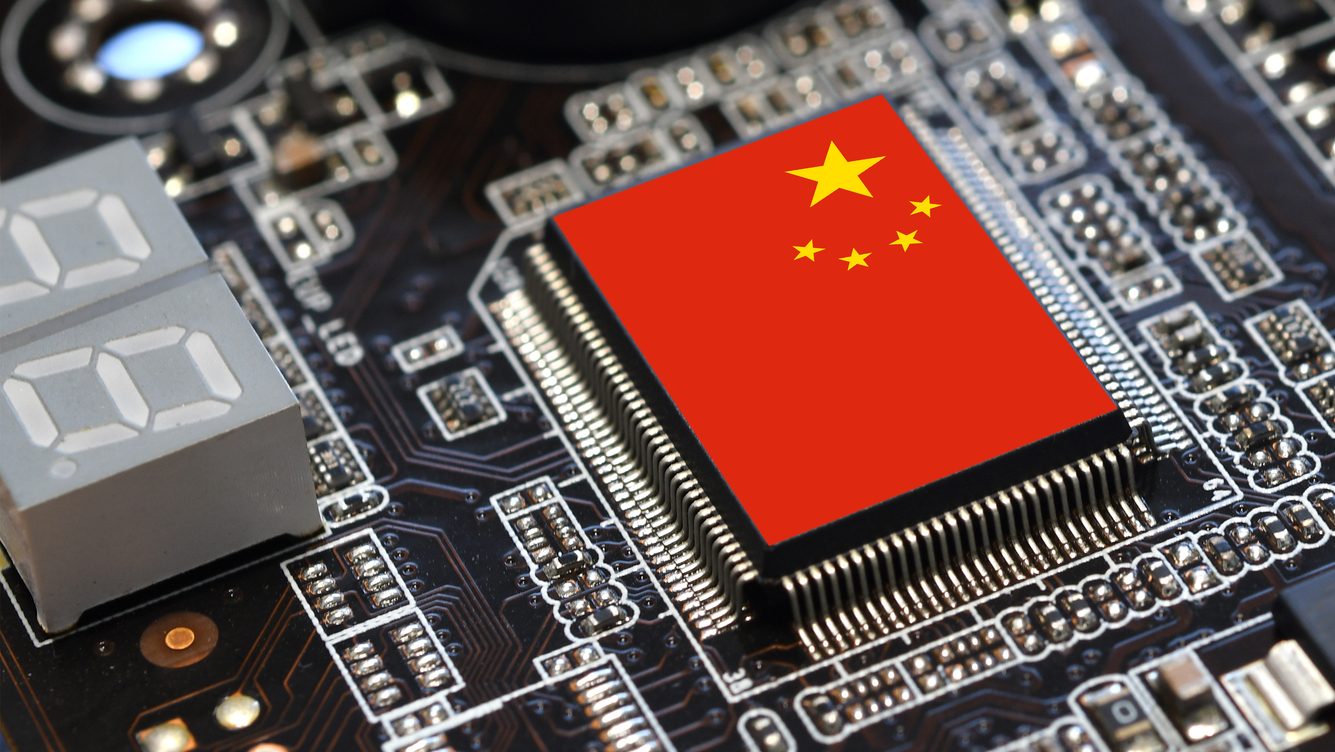

BEIJING: Chinese financial technology company Ant Group Co., backed by businessman and philanthropist Jack Ma, used Chinese-made semiconductors to develop techniques for training artificial intelligence (AI) models that could reduce costs by 20%, according to people familiar with the matter.
Bloomberg reported that according to the sources, Ant used domestic chips from Alibaba Group and Huawei to train its models using the mixture of experts (MoE) machine learning approach — delivering results similar to Nvidia’s H800 chips, which are currently barred from sale to China due to US export controls.
Sources added that while Ant still uses Nvidia for AI development, it relies more on alternative chips from Advanced Micro Devices (AMD) and Chinese manufacturers for its newer models.
Ant claimed its models have matched or even outperformed Meta’s platforms in certain tests, according to its published research paper. Ant’s paper stated that its models, Ling-Lite and Ling-Plus, outperformed DeepSeek’s equivalents in Chinese-language benchmarks, with Ling-Lite also performing better than one of Meta’s Llama models in a key benchmark.
According to sources, Ling-Plus and Ling-Lite will be used for industrial AI solutions, including healthcare and finance.
Ant made the Ling models open source, with Ling-Lite containing 16.8 billion parameters and Ling-Plus having 290 billion. Parameters are adjustable settings that control a model’s performance. For comparison, OpenAI’s GPT-4.5 is estimated to have 1.8 trillion parameters, while DeepSeek-R1 has 671 billion, according to the MIT Technology Review.
Training large language models (LLMs) usually requires high-performance GPUs, making it expensive for smaller companies. Ant said it cost about 6.35 million yuan (S$1.17 million) to train one trillion tokens, units of data AI models process to generate responses, using high-performance hardware. However, its optimised approach could lower the cost to 5.1 million yuan with lower-specification hardware.
Ant acknowledged challenges during training, where small changes in hardware or model structure led to problems like jumps in the models’ error rate.
According to Bloomberg Intelligence analyst Robert Lea, Ant Group’s paper highlights the rising innovation and rapid progress in China’s AI sector. If the claims are confirmed, China could be on its way to becoming self-sufficient in AI, he added.
As one netizen put it, “Well, as some great man once said, ‘Necessity is the mother of invention’.” /TISG
Read also: Trump administration officials considering tighter curbs on Nvidia chips sold to China: Bloomberg
Featured image by Depositphotos (for illustration purposes only)
 Follow Google News
 Join us on WhatsApp
 Follow us on Telegram