

Summary
-
A 53-year-old man says he collected more than S$1,000 in refunds under Singapore’s beverage container return scheme.
-
He typically earns between S$10 and S$20 daily by collecting thrown-away drink cans and bottles after work.
-
He cycles around areas such as Geylang and Tanjong Pagar, sometimes making several collection trips on weekends.
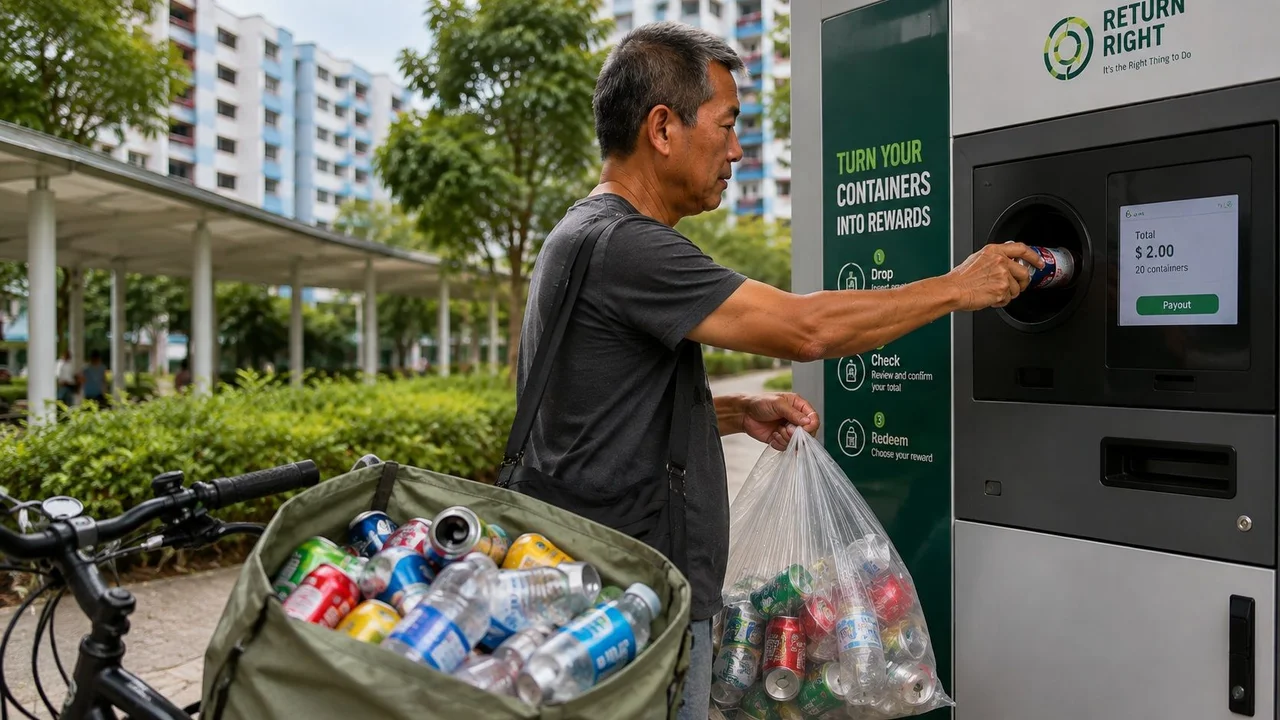
SINGAPORE: A 53-year-old Singapore man says he has earned more than S$1,000 in refunds by collecting thrown-away drink containers.
He spends nearly two months gathering empty cans and bottles left behind by other people. His daily returns usually range from S$10 to S$20.
The man works near Amoy Street Food Centre and cycles around Singapore after work. He searches for eligible containers around places such as Geylang and Tanjong Pagar.
The scheme gives his discarded finds a small but real cash value. Each eligible container carries a 10-cent deposit, which can be recovered through designated Return Right machines, 8world reported (Aug 30).
Cycling for empty cans after work
The man said he looks around rubbish bins and nearby areas where people leave empty drink containers. He estimated he had collected about 100 bottles and empty cans on the day of the interview with 8world.
His work takes much effort, though. He cycles around after finishing his regular job, then gathers enough containers to make the trip worthwhile.
He also sometimes goes out three times a day on weekends. His refunds are credited to his EZ-Link card. At 10 cents per container, S$10 means returning 100 eligible containers. S$20 means twice that amount.
Although the man isn’t making a fortune from individual bottles, at least not yet, he is still making the system work through volume and persistence.
A new value for discarded containers
Singapore’s Beverage Container Return Scheme (BCRS) started on Apr 1, 2026. It covers eligible plastic and metal drink containers from 150 ml to 3 litres.
Consumers pay a 10-cent deposit for containers carrying the BCRS Deposit Mark. They get the money back when the empty container is returned at a designated Return Right machine.
The National Environment Agency (NEA) says the scheme is expected to cover more than one billion beverage containers each year. It also aims to recover more than 16,000 tonnes of material annually.
The man’s experience shows another side of the scheme.
For some people, the 10 cents may be easy to ignore. For someone willing to collect hundreds of containers, those small deposits can add up to a meaningful amount.
Other people interviewed by 8world also described collecting containers to help older people who may not have the required app.
Small deposits can still make a difference
The scheme was designed to improve recycling, but discarded bottles and empty cans can now also offer a small financial incentive, changing how some people may view something that would usually be treated as rubbish.
However, the refund system only works when people return the containers rather than leave them behind.
Singapore has made the return process easier by expanding the network of machines. More than 1,000 Return Right machines are being deployed, with the network planned to reach 2,000 within the first year.
The man’s S$1,000 shows what can happen when someone takes those 10-cent refunds seriously.
A bottle thrown beside a bin may look worthless. Pick up enough of them, and the numbers tell a different story.
Read related: Singapore rolls out 10-cent return scheme for beverage containers from April 1, with 1,000 machines islandwide
 Follow Google News
 Join us on WhatsApp
 Follow us on Telegram