
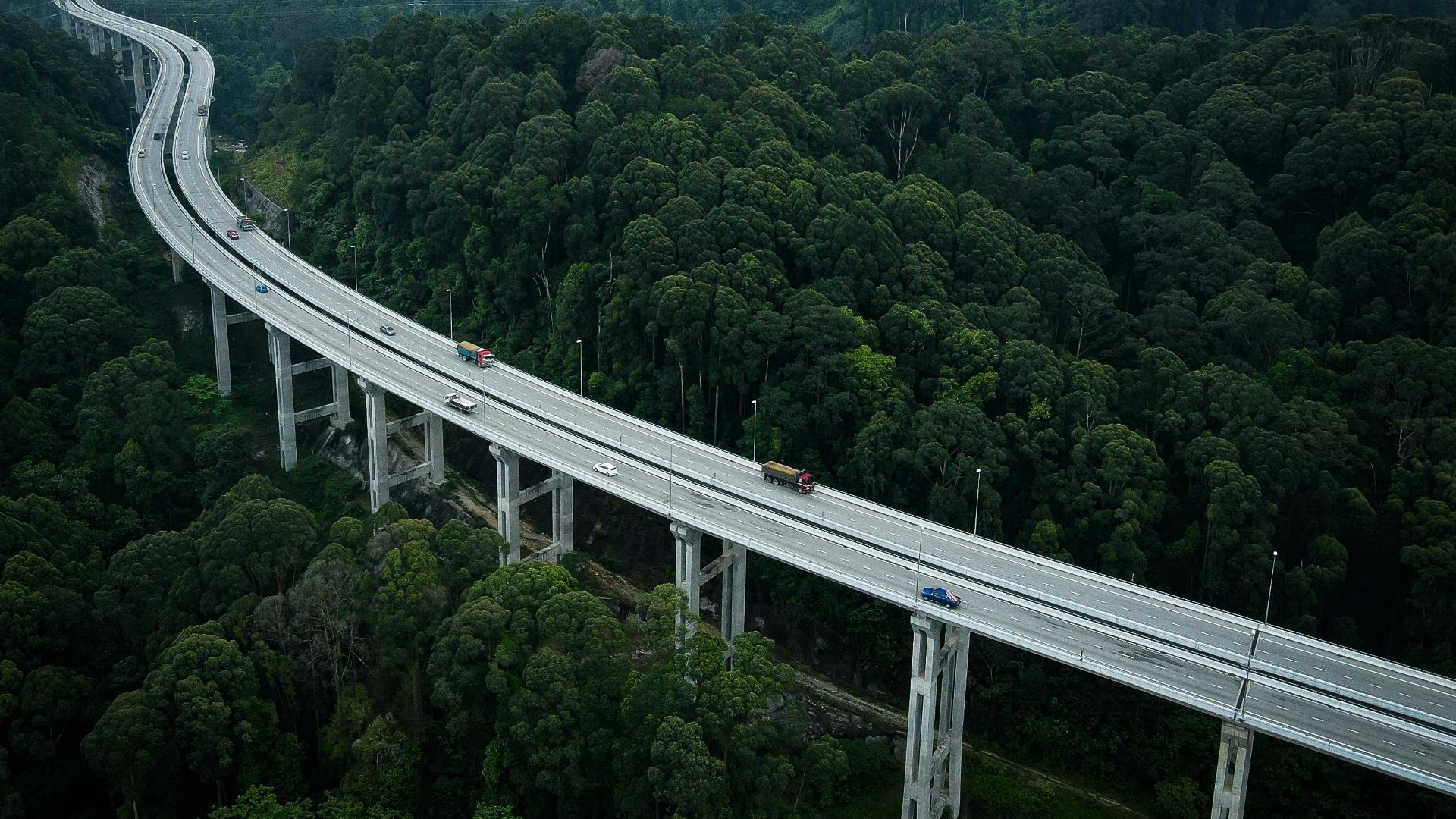

MALAYSIA: It’s no secret that Malaysia is a car‑centric country where owning a vehicle is often essential to pursue education or secure employment. For decades, the response has been to build bigger, higher highways to meet demand, but congestion remains severe—traffic jams in Kuala Lumpur are especially brutal during peak hours.
Policies, subsidies and easy car loans made driving cheap, worsening congestion, pollution and road deaths. Walkable streets and cycling are neglected; sidewalks vanish under parking and workshops. The result: strained finances, poorer health, unsafe roads, cities for cars, not people today.
Social media debates increasingly highlight Malaysia’s walkability problem. While parts of Kuala Lumpur may appear pedestrian‑friendly, the reality shifts dramatically once you step into suburban areas. Sidewalks are scarce, often missing altogether, leaving residents dependent on cars even for short trips.
On social media platform X, one user pointed out that the SUKE Highway, opened in 2022 after long delays, towers nearly as high as a 10‑storey building. Photos of its elevated structure have fueled debate online, reinforcing the view that Malaysia is far from a walkable country.
Some view the highway as a practical fix for congestion, but others argue it’s only a temporary band‑aid masking Malaysia’s deeper reliance on cars.
Additionally, another commenter criticised the design of the new LRT3, noting that residents often lack direct access to stations. He highlighted the irony of needing to drive to the LRT just to use it—defeating the purpose of public transit meant for those who cannot afford cars or are unable to drive.
Furthermore, some contrasted Malaysia’s car‑centric design with Singapore’s walkability. Despite sharing the same tropical climate, Singapore maintains well‑kept sidewalks that make everyday trips—like walking from home to a convenience store—simple and safe. The same can’t be said for most places in Malaysia.
Others shared a troubling observation: schoolchildren in Cheras, near the SUKE Highway, were seen attempting to cross roads revamped beneath the elevated structure. He described the sight as heart‑stopping, stressing how dangerous it is for young students to navigate such traffic conditions.
Change will be difficult: reworking the Klang Valley’s infrastructure would be astronomically expensive. As Malaysia’s urban population keeps rising, traffic jams will inevitably worsen.
Without systemic investment in public transport and walkability, highways remain a costly band‑aid. The challenge is balancing growth with sustainable mobility, rather than repeating the cycle of congestion through endless road expansion.
 Follow Google News
 Join us on WhatsApp
 Follow us on Telegram